
If you open your car’s hood to do more than replenish the windshield washing fluid, you’re probably familiar with the engine block, cylinders, pistons and other parts usually seen only by mechanics. So what are they, these usually kept-in-the-dark components, and what do they actually do?
Very simply described, a cylinder is the main working part of an engine, in this case your car’s reciprocating engine, an internal combustion or ‘heat engine’ that converts pressure into a rotating motion that makes the axles and the wheels go ‘round and ‘round. Each piston is inside a cylinder, where fuel and air mix, expand in the heat, and push that piston up and down to provide the engine’s power.

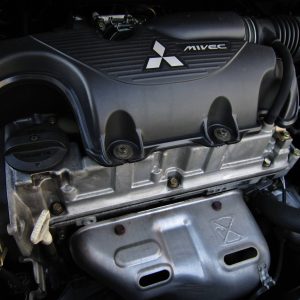

The number of cylinders, and the volume displaced by the engine (this refers to the “swept volume” of all the pistons inside the cylinders in one movement from top to bottom; usually measured in cubic centimeters, or CCs) are factors which determine how powerful your engine is, how big it is, its performance specs, and more. Generally, the more cylinders, the more CCs, the bigger the engine, the more horsepower. (Some cars are engineered to produce more horsepower out of a smaller engine, so the rule isn’t inviolable.)
According to Wikipedia, “The inline-four engine or straight-four engine is a type of inline internal combustion four-cylinder engine with all four cylinders mounted in a straight line, or plane along the crankcase. . .(and) the inline-four is the most common engine configuration in modern cars, while the V6 engine is the second most popular.”
Many bigger and more powerful V8s and 12s occupy supercar and race car territory.
(The crankcase houses the crankshaft, which converts the piston motion into rotational motion, to make the car move.)
If you’re new-car shopping, consider engine size and number of cylinders, along with MPG estimates, to determine the kind of driving performance you can expect. A test drive, including at highway speeds, can help you decide what’s best for you.
**These makes are among the best four-cylinders according to recent evaluations by U.S. News & World Report
The compact Mazda3 (available in 155-hp and 184-hp models), the compact hatchback Kia Soul (with engine choices ranging from a 1.6-liter, 130-hp to a 201-horsepower turbocharged 1.6-liter version), and the Honda Civic, offered in a 2.0-liter,158-horsepower model and a 174-hp, 1.5-liter turbo for the upper trim levels.
Although many top-ranked four-cylinder cars are compacts, four-cylinders are also used to power larger cars, like the Chevy Malibu (the best-rated midsize sedan in the magazine’s rankings). The Malibu’s top-tier 250-horsepower, 2.0-liter turbocharged engine is paired with a nine-speed automatic transmission.
It’s very simple to find out any matter on web as compared to textbooks, as I found this article at this site.